


Templeton expanded the value investor’s search beyond one country. His career shows the opportunity and the extra risks created by global investing.
Written by Ibraham
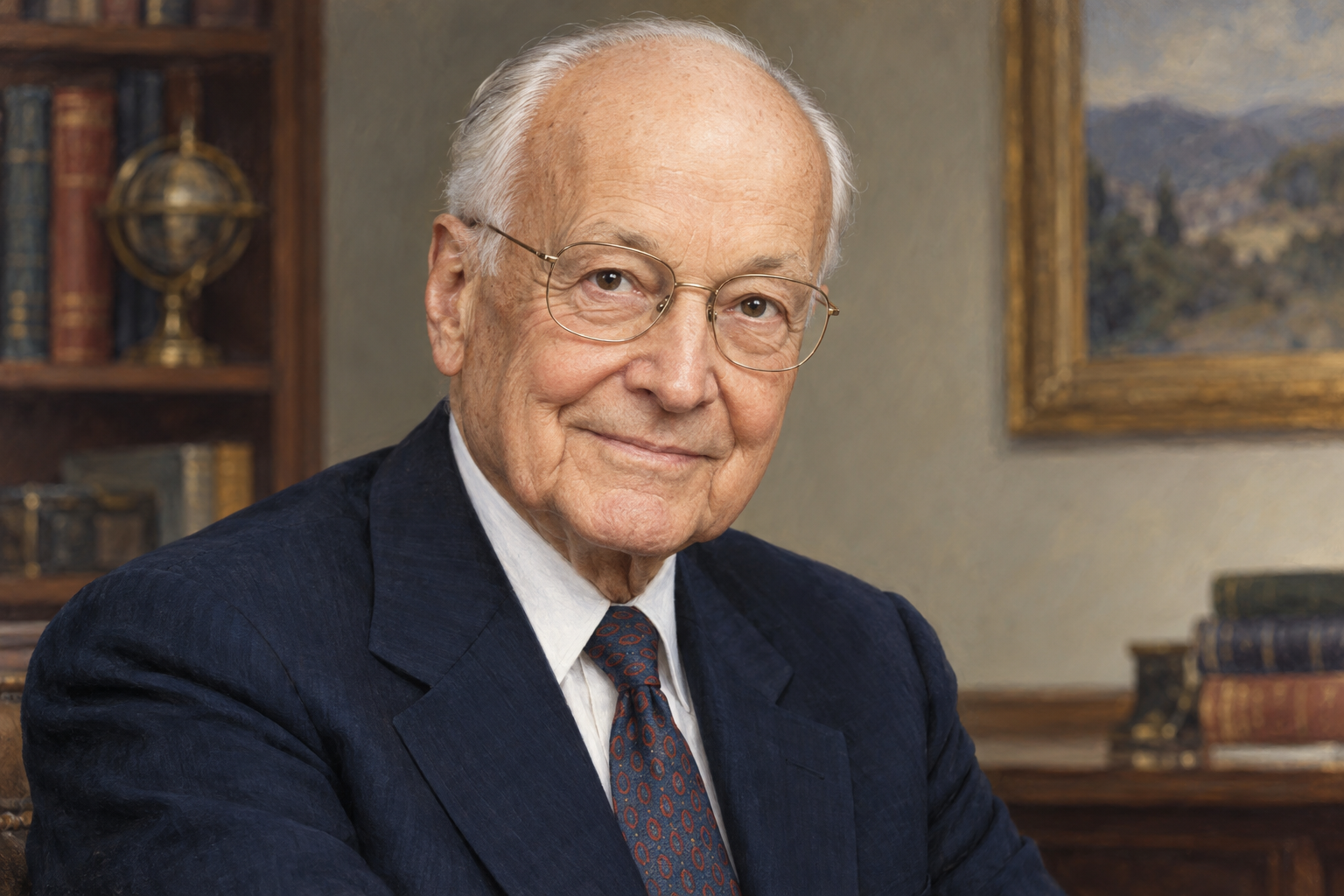
AI-generated editorial portrait of John Templeton, created for WealthPast. This is an artistic reconstruction, not a historical photograph.
John Templeton entered the mutual-fund industry in 1954 with the Templeton Growth Fund. The John Templeton Foundation says a hypothetical $10,000 invested at inception, with dividends reinvested, would have reached $2 million by 1992, when he sold the Templeton fund business to Franklin.
That historical illustration is striking, but it needs careful interpretation. It describes one long period, depends on reinvestment and does not tell every investor’s result after taxes, sales charges or the timing of withdrawals. The more durable lesson is the process behind the fund: search across countries, compare prices with business value and be willing to investigate markets other investors dislike.
Why a global opportunity set changes investing
A domestic investor sees only part of the public-company universe. Looking abroad adds industries, economic cycles and valuations that may differ from the home market. It can reduce dependence on one country’s policy and business environment.
Global diversification also adds risks. Currency movements can raise or erase a local-market gain. Accounting standards, shareholder protections, liquidity and political conditions vary. A cheap foreign security may be cheap because outside shareholders have limited influence or because capital cannot move freely.
Contrarian investing is a research process
Templeton is associated with buying when pessimism is widespread. That does not mean every falling market is a bargain. A contrarian investor needs a reason the consensus is too negative and evidence that the company can survive long enough for conditions to improve.
The distinction matters financially. A temporary earnings decline may create a discount, while permanent technological change can destroy the old value. Debt, refinancing needs and cash burn determine whether time helps the investor or the creditors. Contrarian investing works only when the analysis separates distress from impairment.
From an investment business to a financial institution
Franklin Templeton records that the 1992 transaction with Templeton, Galbraith & Hansberger was then the largest merger of independent mutual-fund companies. The deal shows another part of Templeton’s legacy: an investment philosophy became a scalable management and distribution business.
Fund assets still belonged to clients. The sale value of the management company reflected contracts, distribution, research capacity and the fees those client relationships could produce. It should not be confused with all assets managed by the funds or treated as Templeton’s personal cash.
Capital and philanthropy
Templeton established the Templeton Prize in 1972 and the John Templeton Foundation in 1987. His later institutions funded research into science, human purpose and major philosophical questions. The sequence is part of the financial story: wealth created through an investment-management enterprise was redirected into a permanent grant-making structure.
What an investor can learn
Start with a wider comparison set. A company should not be called cheap merely because it trades below peers in its own country; compare profitability, balance-sheet strength, governance and currency exposure across markets. Build a scenario for what happens if the catalyst takes years. Limit position size because political and accounting risks may be difficult to observe.
Investors using pooled funds should also examine cost and implementation. Our guide to ETF premiums and discounts to NAV explains how a market price can differ from portfolio value. The index mutual fund versus ETF comparison covers trading, taxes and automation.
Templeton’s record is a history lesson, not a promise that international or contrarian funds will repeat it. His useful insight was that opportunity can be geographically uneven. The investor’s job is to decide whether the lower price compensates for the additional risk.
Sources
- John Templeton Foundation — Sir John Templeton
- John Templeton Foundation — Memorial record
- Franklin Templeton — Corporate history
- Templeton World Charity Foundation — Our founder
Explore the complete John Templeton profile in the WealthPast archive.