


The Robert Solow growth model changed how economists separate the effects of capital, labor and productivity. Solow did not offer a recipe that guarantees prosperity. He built a conditional framework: adding capital can raise output per worker, but diminishing returns limit that route, while sustained long-run growth in output per worker requires improvement that the basic model treats as technological progress.
Written by Ibraham
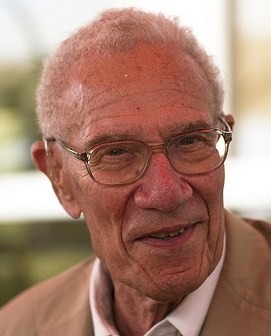
Solow’s question was national growth, not personal fortune
Robert M. Solow was born in Brooklyn on August 23, 1924, joined MIT’s economics department in 1949 and remained affiliated with the Institute for 74 years. His 1950s work helped establish modern growth accounting and growth theory. The 1987 economics prize recognized his contributions to the theory of economic growth, and his prize lecture on December 8, 1987 reviewed both the model’s achievements and its unresolved gaps.
That history must be kept separate from wealth biography. GDP, national capital and a country’s productivity are not Solow’s own income or assets. The records used here do not establish an audited personal net worth or estate value. See the Robert Solow profile for the dated biographical record and source boundaries.
Capital deepening raises the level before returns diminish
Imagine a fictional economy with 100 workers and 100 units of productive capital. If it adds 20 units while labor stays constant, capital per worker rises from 1.0 to 1.2 units. Output per worker may rise because workers have more or better tools. The model does not say output must rise by 20%, however. The production relationship and depreciation matter, and each additional unit of capital contributes less when other inputs are unchanged.
This is why saving and investment can create a transition to a higher level of output per worker without permanently raising its growth rate in the standard model. Our Adam Smith productivity lesson approaches specialization and institutions historically; Solow supplies a later formal distinction between accumulating inputs and improving how inputs are used.
The residual is an accounting remainder, not an invention counter
Growth accounting asks how much measured output growth is associated with measured growth in capital and labor. What remains after applying estimated input contributions is often called total factor productivity or the Solow residual. It can reflect technical improvement, but it can also absorb changes in quality, utilization, organization, measurement and omitted inputs.
Consider a simplified illustration. Suppose output grows 4%, measured capital contributes 1.2 percentage points and measured labor contributes 0.8. The unexplained remainder is 2 percentage points: 4.0 − 1.2 − 0.8. Calling all two points “new inventions” would overstate what the arithmetic proves. The residual is evidence that the measured inputs do not explain everything, not a direct observation of one cause.
Growth is not the same as welfare
A higher production total does not show how income is distributed, whether environmental costs were recorded or whether unpaid activity changed. The scheduled Simon Kuznets national-income analysis makes the related warning that an aggregate measure is not a complete welfare score.
Solow’s framework also treats long-run technological progress as external in its basic form. Later endogenous-growth research tried to model research, ideas and human capital more directly. Solow himself noted in the 2001 addendum to his lecture that the endogenous-growth movement had changed the field after 1987.
A practical reading checklist
When a forecast claims that investment will permanently accelerate growth, ask whether it describes a transition in the capital level or an enduring change in productivity growth. Check depreciation, population, labor quality, utilization and the model’s assumptions. A company-level cash-flow addback is another measurement question, not the same concept; the scheduled Salesforce cash-flow lesson shows why accounting classifications must stay tied to their own scope.
Solow’s lasting contribution was disciplined separation. More tools can raise production, but accumulation alone faces limits. The unexplained remainder can guide investigation, yet it should not be treated as a perfectly measured technology variable or a promise about future national wealth.
Sources and Method
- MIT News — Robert Solow memorial, December 22, 2023
- NobelPrize.org — Robert M. Solow facts
- NobelPrize.org — Growth Theory and After, December 8, 1987
Checked November 9, 2026. The 100-worker and percentage-point examples are original teaching calculations, not historical estimates or investment advice.