
Franco Modigliani’s Life-Cycle Theory: Saving, Retirement and Financing Assumptions
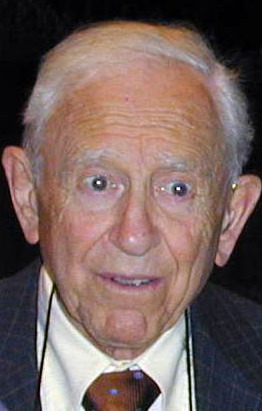
Understand Franco Modigliani’s life-cycle theory, retirement saving and the assumptions behind Modigliani–Miller, with clear limits and a worked example.

Discover the untold stories of history's greatest fortunes — from ancient empires to modern billionaires. Learn the money lessons they never taught you.
Discover the untold stories of history's greatest fortunes — from ancient empires to modern billionaires. Learn the money lessons they never taught you.
Understand Franco Modigliani’s life-cycle theory, retirement saving and the assumptions behind Modigliani–Miller, with clear limits and a worked example.

Learn how Robert Solow separated capital deepening from productivity growth, why diminishing returns matter, and why the Solow residual is not pure technology.
James Tobin’s portfolio theory explained through risk, diversification, liquidity, asset prices and how financial-market changes can influence real investment without guaranteeing returns.
Richard Stone’s national accounts explained through stocks, flows, sector balances, reconciliation and why accounting consistency does not prove causation or welfare.
Wassily Leontief’s input–output analysis explained through supply-chain requirements, gross output, multipliers, bottlenecks and the limits of fixed technical coefficients.
Simon Kuznets’s national income accounts explained through production measurement, growth comparisons, inequality evidence and the limits of treating GDP as welfare.
Kenneth Arrow’s social choice and contingent-claims ideas explained through voting rules, state-dependent payoffs, incomplete markets and the limits of equilibrium.
John Hicks’s IS–LM and capital models explained through simplification, equilibrium, time, aggregation and why a useful diagram is not the whole economy.
Ragnar Frisch’s econometrics explained through shocks, propagation, statistical testing, explicit policy objectives and why fitted equations cannot choose social priorities.
Jan Tinbergen’s econometric policy models explained through targets, instruments, testing, coordinated decisions and the risk of treating estimates as certain forecasts.