
Adam Smith’s Wealth of Nations: Productivity, Institutions and Personal Income
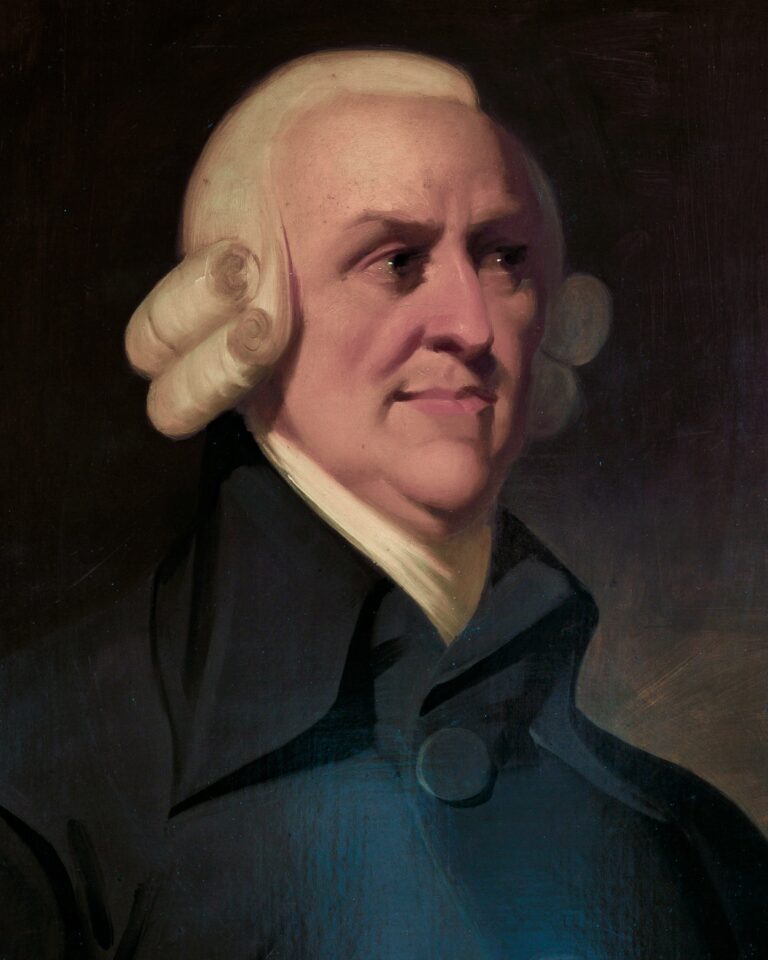
Adam Smith’s Wealth of Nations explained through specialization, institutions, public duties and the difference between national wealth and personal income.

Discover the untold stories of history's greatest fortunes — from ancient empires to modern billionaires. Learn the money lessons they never taught you.
Discover the untold stories of history's greatest fortunes — from ancient empires to modern billionaires. Learn the money lessons they never taught you.
Adam Smith’s Wealth of Nations explained through specialization, institutions, public duties and the difference between national wealth and personal income.

How Alfred Krupp scaled steel through railway products, reinvestment and vertical integration—and nearly lost the business during the 1873 crisis.
How Eli Whitney’s cotton-gin patent struggled to capture value while the technology helped expand an economy built on enslaved labor.
How Samuel Colt combined precision manufacturing, contracts and branding—and why Elizabeth Colt’s later stewardship belongs to a separate chapter.
How Charles Goodyear’s 1844 vulcanization patent created industrial value while infringement, litigation and weak commercialization limited his returns.
How Rudolf Diesel moved from an 1892 design to patents and working engines—and why theoretical efficiency was not yet commercial profit.
How Werner von Siemens joined telegraph contracts, international expansion, the dynamo principle and employee capital into an industrial system.
How Marconi moved from wireless experiments to a 1897 company, stations, trained operators and commercial transatlantic service.
How Nikola Tesla turned AC patents into a Westinghouse relationship, then faced the capital and execution risks of Wardenclyffe.
How George Stephenson joined locomotives, routes and operating systems to reduce transport friction—and why invention alone did not create value.