
George Westinghouse’s 1869 Air Brake: Safety, Patents and Industrial Scale
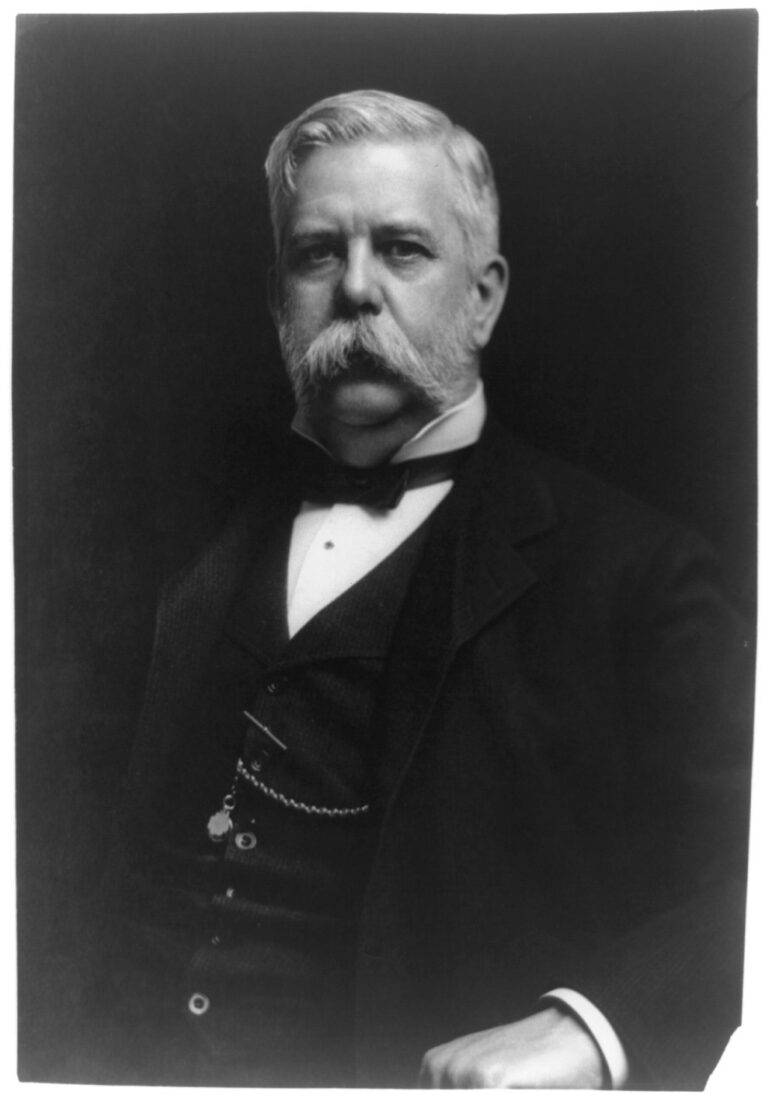
How George Westinghouse turned the 1869 air brake into a railway-safety business, then applied systems thinking to signaling and electric power.

Discover the untold stories of history's greatest fortunes — from ancient empires to modern billionaires. Learn the money lessons they never taught you.
Discover the untold stories of history's greatest fortunes — from ancient empires to modern billionaires. Learn the money lessons they never taught you.
How George Westinghouse turned the 1869 air brake into a railway-safety business, then applied systems thinking to signaling and electric power.

How Alfred P. Sloan’s GM combined decentralized divisions with central financial control—and why the system’s efficiency does not erase its limits.
How J. C. Penney’s 1902 Golden Rule store used local managers, part ownership and repeatable retail rules to expand beyond one Wyoming town.
What HP’s $538 of working capital actually included, how early product economics supported growth, and why David Packard’s management model mattered.
How Mary Kay Ash started her company with $5,000 in 1963, why direct selling reduced retail overhead, and where consultant costs change the profit story.
How Howard Hughes used control of the family tool business to finance aircraft, film and property—and why concentrated ownership created governance risk.
How J. Paul Getty’s long-duration Neutral Zone concession turned exploration risk into oil wealth—and how a historical $700 million bequest changed his legacy.
What Gordon Moore actually predicted in 1965, why he revised it in 1975, and how a cost curve became an investment target rather than a law of nature.
How Intel left DRAM in 1985, why Andrew Grove treated past success as a strategic risk, and what the shift to microprocessors teaches about capital allocation.
How Henry J. Heinz rebuilt after failure, used transparent jars and scaled distribution—plus what “57 Varieties” really meant.